









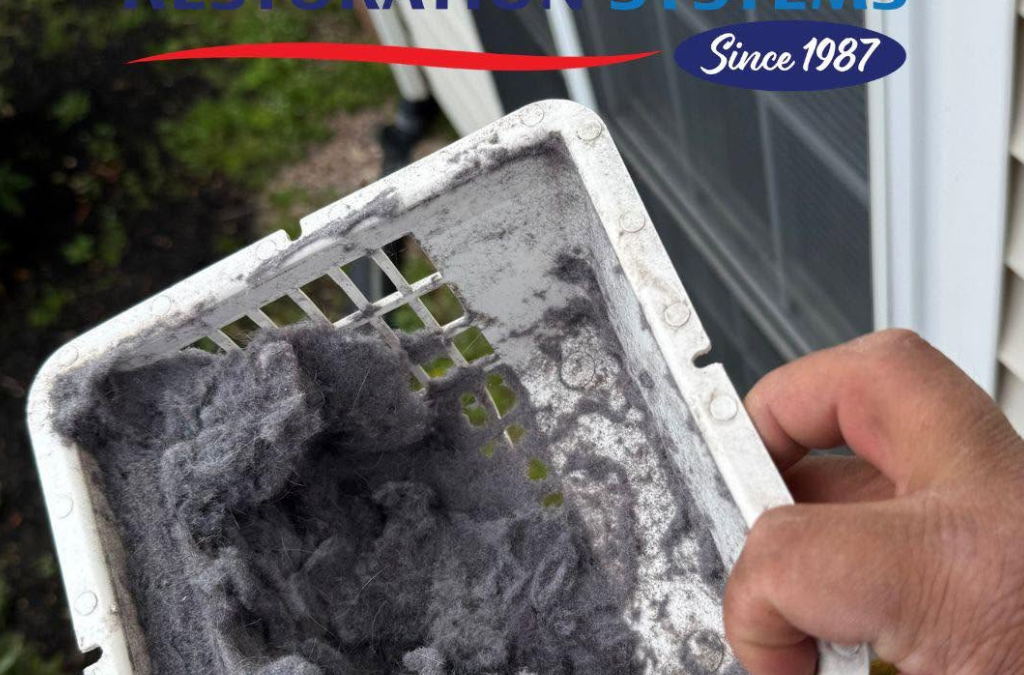
Signs You Need Dryer Vent Cleaning include clothes that take multiple cycles to dry, a dryer that runs unusually hot, a burning smell, or visible lint escaping around the vent. Clogged dryer vents contribute to nearly 3,000 U.S. fires annually, making professional dryer vent cleaning in Connecticut an important safety measure for every household. Professional Cleaning & Restoration Systems of Connecticut provides IICRC-certified dryer vent cleaning throughout New Haven County to help eliminate fire hazards, restore proper airflow, and reduce energy costs for every laundry load.
Is your dryer taking longer to dry clothes?
A dryer taking too long to dry clothes on a single cycle is one of the clearest signs dryer vent is clogged. This performance drop is the most common warning sign Connecticut homeowners encounter. The problem stems from trapped moist air that cannot escape through a blocked duct. Clothes remain damp, cycle times stretch, and energy costs climb with every extra run.
What causes a dryer to stop drying efficiently?
A clogged vent traps moist air inside the drum. The damp, heated air recirculates instead of exhausting outside. Fabrics absorb that lingering moisture rather than releasing it. The result is a load that feels wet even after a full timed cycle. Homeowners in New Haven County often notice the issue first with heavier items like towels and bedding. These thick fabrics hold more water and expose restricted airflow faster than lightweight garments.
A vent that was clear a year ago can still become blocked gradually. Lint does not arrive all at once; it builds in thin layers with every load, narrowing the duct a little more each month. Longer vent runs, sharp bends, and screened outdoor caps all trap lint more readily than a short, straight path. Homes with older ductwork or flexible foil vent lines are especially prone to this gradual narrowing, since lint catches easily on the ribbed interior surface. By the time drying times noticeably stretch, the obstruction is often substantial rather than minor, which is why a single bad cycle should prompt a closer look rather than another reset of the dial.
How can you tell if the vent is the problem?
Three physical signs point directly to vent blockage. First, clothes feel abnormally hot when a cycle finishes. The dryer’s exhaust heat has nowhere to go, so it transfers into the fabric. Second, the appliance exterior runs hotter than usual. Exterior surfaces that feel warm or hot to the touch indicate heat buildup inside the machine. Third, the laundry room itself grows humid during operation. Moisture that should vent outdoors seeps back into the living space. These symptoms confirm airflow is restricted somewhere in the system.
Professional dryer vent cleaning restores proper exhaust flow and eliminates the fire risk that accompanies lint accumulation. Technicians serving Connecticut communities inspect the full vent run, remove compacted debris, and verify that moist air exits the home as designed. A single-cycle dry time returns. The dryer runs at a safer operating temperature. Energy waste stops. For homeowners who spot these warning signs, scheduling a thorough cleaning prevents the hazard from escalating into a signs you need dryer vent cleaning situation that demands immediate attention.
Do you notice a burning smell or excess heat?
A burning smell from a dryer signals immediate danger. A dryer that runs hot to the touch confirms a blocked vent system. These are not minor quirks. They are urgent warnings that lint has accumulated inside the ductwork, restricting airflow and creating a fire hazard every time the appliance operates. Homeowners who ignore these signs risk catastrophic property loss.
The stakes are severe. Nearly 3,000 dryer fires are reported in the United States each year, causing millions of dollars in property damage. The leading cause of these fires is clogged dryer vents filled with lint and debris. A faint burning odor means lint is already overheating somewhere in the vent line. The next stage can be ignition.
What causes the burning smell in a dryer?
Lint buildup inside the vent line restricts airflow. The dryer then traps heat that should escape outdoors. That trapped heat scorches accumulated lint, producing the distinct acrid odor. The appliance itself may feel unusually hot to the touch. Every cycle pushes the system closer to combustion.
Lint itself is highly flammable; it ignites at a relatively low temperature and burns quickly once airflow feeds it oxygen through a partially blocked duct. A dryer’s heating element is designed to operate within a narrow temperature range that assumes air is moving freely through the system. When a blocked vent prevents that airflow, the heating element and surrounding components run far hotter than their design allows, and the margin between normal operation and ignition narrows with every cycle. This is why fire data consistently shows dryer vent lint as a leading cause of residential appliance fires rather than a rare occurrence.
How quickly should a burning smell be addressed?
Immediately. The hazard does not resolve on its own, and effective dryer vent fire prevention depends on addressing it right away. Lint continues to accumulate with each load. Professional Cleaning & Restoration Systems of Connecticut responds to these emergencies across New Haven County. The company’s technicians clear the obstruction and restore safe airflow. Delaying service allows the fire risk to compound.
The warning signs are often slow to appear at first. A faint burning smell may come and go. The dryer exterior may feel warm, then hot. These incremental changes lull homeowners into complacency. But the underlying condition only worsens. Lint is highly combustible. A restricted vent turns the dryer into a potential ignition source. Professional Cleaning & Restoration Systems of Connecticut eliminates that risk through thorough vent cleaning. The service protects both property and the people inside it.
Have you checked the vent cap or outdoor exhaust?
A blocked outdoor vent cap signals a dangerous restriction in the dryer exhaust system. Lint accumulation, bird nests, and debris at the exterior termination point prevent moisture and hot air from escaping, creating a fire hazard with every drying cycle. Professional dryer vent cleaning services restore safe airflow and reduce the risk of fire by clearing lint and obstructions from the entire vent run, including the critical outdoor exhaust point.
What does a properly functioning outdoor vent look like?
The exterior vent cap should open fully when the dryer runs. Warm, moist air exits with noticeable force. A weak stream or no airflow at all indicates a blockage somewhere in the system. The flap should close completely when the dryer stops, preventing pests and outside air from entering.
Checking the cap takes only a moment but tells homeowners a good deal about the health of the entire vent run. Stand outside near the exhaust point while a dryer cycle is running and hold a hand near the opening. A strong, steady stream of warm air confirms the system is clear from the dryer drum all the way to the outdoors. A faint trickle of air, or none at all, means lint has accumulated somewhere along the duct, even if the vent cap itself looks clean. Birds and small animals are also drawn to the warmth of a vent opening and will sometimes build nests inside an unprotected or damaged cap, compounding the blockage further.
Why does the outdoor exhaust matter for dryer performance?
Clearing the vent improves dryer efficiency, helping the appliance run faster and last longer. A restricted outdoor exhaust forces the dryer to work harder, extending cycle times and increasing energy consumption. Homeowners in New Haven County often notice the difference immediately after a thorough cleaning: clothes dry in a single cycle, and the laundry room maintains a more comfortable temperature.
Signs you need dryer vent cleaning often appear at the outdoor exhaust first. Lint visible around the vent cap, a flap that stays partially open, or moisture staining on the exterior wall all point to restricted airflow. These indicators should prompt immediate attention.
Professional Cleaning & Restoration Systems of Connecticut offers premium cleaning and restoration services across New Haven County, including comprehensive dryer vent cleaning. The company differentiates itself with a no bait-and-switch pricing policy and a 200% Risk-Free Guarantee on every job. Technicians inspect the full vent path, from the dryer connection to the outdoor termination, removing accumulated lint and verifying proper airflow at the exhaust point.
Regular inspection of the outdoor vent cap takes seconds. A quick visual check before each laundry load catches problems early. When airflow seems weak or the flap fails to open, scheduling a professional dryer vent cleaning prevents the hidden lint buildup from becoming a serious safety threat.
Conclusion
These warning signs (slow drying, excess heat, burning smells, and a blocked outdoor vent) each point to the same root cause: restricted airflow in the dryer vent system. Ignoring them allows lint to accumulate and the fire risk to grow with every load. A professional cleaning restores safe exhaust flow, shortens cycle times, and eliminates the hazard. Homeowners who spot any of these indicators should schedule service immediately rather than waiting for the problem to escalate into an emergency.
Frequently Asked Questions
How often should dryer vents be cleaned in Connecticut?
Most Connecticut households benefit from professional dryer vent cleaning once a year, though homes with longer vent runs, large families, or pets that shed heavily may need service every six to nine months. A yearly check keeps lint from accumulating to the point where it restricts airflow or creates a fire hazard.
What are the most common clogged dryer vent symptoms?
The most common symptoms are clothes that stay damp after a full cycle, a dryer or laundry room that feels unusually hot, a burning or musty odor during operation, and visible lint around the outdoor vent cap. Any one of these signs on its own is worth investigating, and multiple signs together usually mean the blockage has become significant.
Can a clogged dryer vent actually cause a house fire?
Yes. Lint is highly combustible, and a restricted vent traps heat that would normally exhaust outdoors, raising the temperature inside the duct with every cycle. Nearly 3,000 dryer fires are reported annually in the United States, and clogged vents are consistently identified as the leading cause.
Is dryer vent cleaning different from dryer lint trap cleaning?
Yes. The lint trap inside the dryer door only catches a portion of the lint produced during drying; the rest travels through the exhaust duct toward the outdoor vent. Cleaning the lint trap after every load is good practice, but it does not remove the lint that accumulates deeper in the vent system, which is why periodic professional dryer vent cleaning is still necessary.
How does Professional Cleaning & Restoration Systems of Connecticut handle dryer vent cleaning?
Technicians inspect the full vent path from the dryer connection to the outdoor termination point, remove compacted lint and debris, and confirm that airflow is fully restored before finishing the job. The company serves New Haven County with a no bait-and-switch pricing policy and a 200% Risk-Free Guarantee on every job.